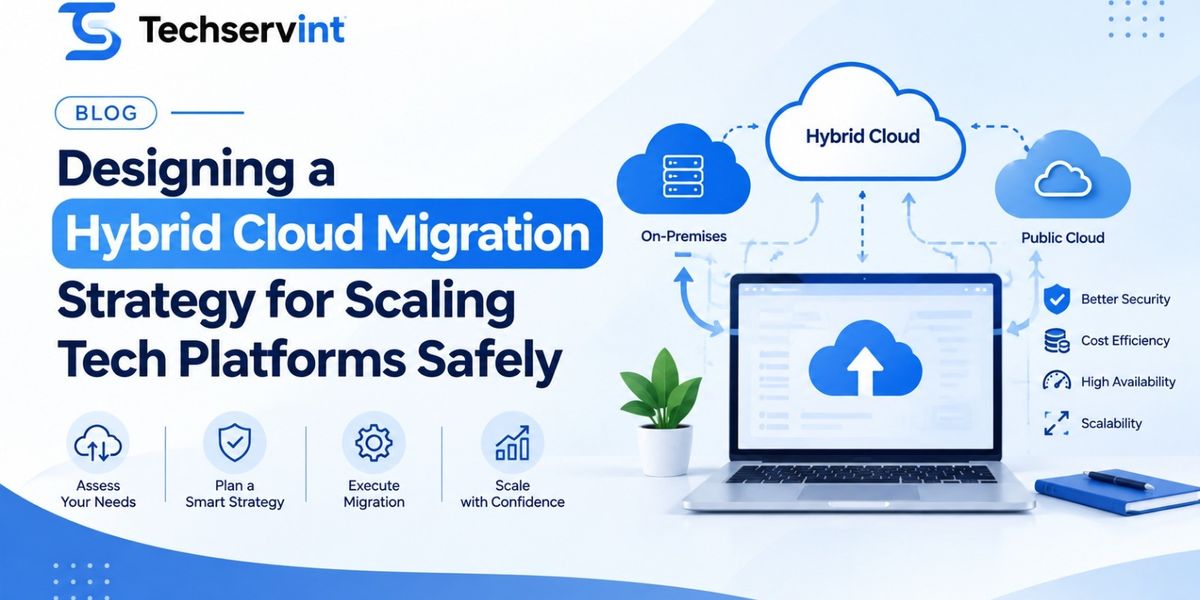
Designing a Hybrid Cloud Migration Strategy Safely
By Techserv International
Designing a Hybrid Cloud Migration Strategy for Scaling Tech Platforms Safely
Is your tech platform's infrastructure struggling to handle sudden spikes in user traffic? For rapidly expanding enterprises and digital businesses across the USA, scaling computing power effectively is a critical survival metric. Relying purely on legacy on-premise hardware limits your infrastructure flexibility and requires massive upfront capital investments. Conversely, migrating entirely to the public cloud overnight can expose sensitive client records to security vulnerabilities and result in unpredictable monthly cloud expenses.
For system architects managing complex application dependencies, a complete infrastructure overhaul introduces severe business risks. Unplanned database downtime, configurations mismatch, data transit drops, and network latency problems can instantly damage your digital user experience and erode corporate trust.
The ultimate solution for sustainable infrastructure scaling is designing a hybrid cloud migration strategy for scaling tech platforms safely. By blending the rigid security of private infrastructure with the fluid elasticity of public cloud services, your company can securely balance operational compliance with infinite computing scale. Let's analyze the technical blueprint required to execute this architectural transition with zero downtime and absolute data safety.
What is a Hybrid Cloud Migration Strategy?
A hybrid cloud setup unifies localized on-premise servers or private clouds with public cloud ecosystems (such as AWS, Google Cloud, or Microsoft Azure) into a single, automated infrastructure network:
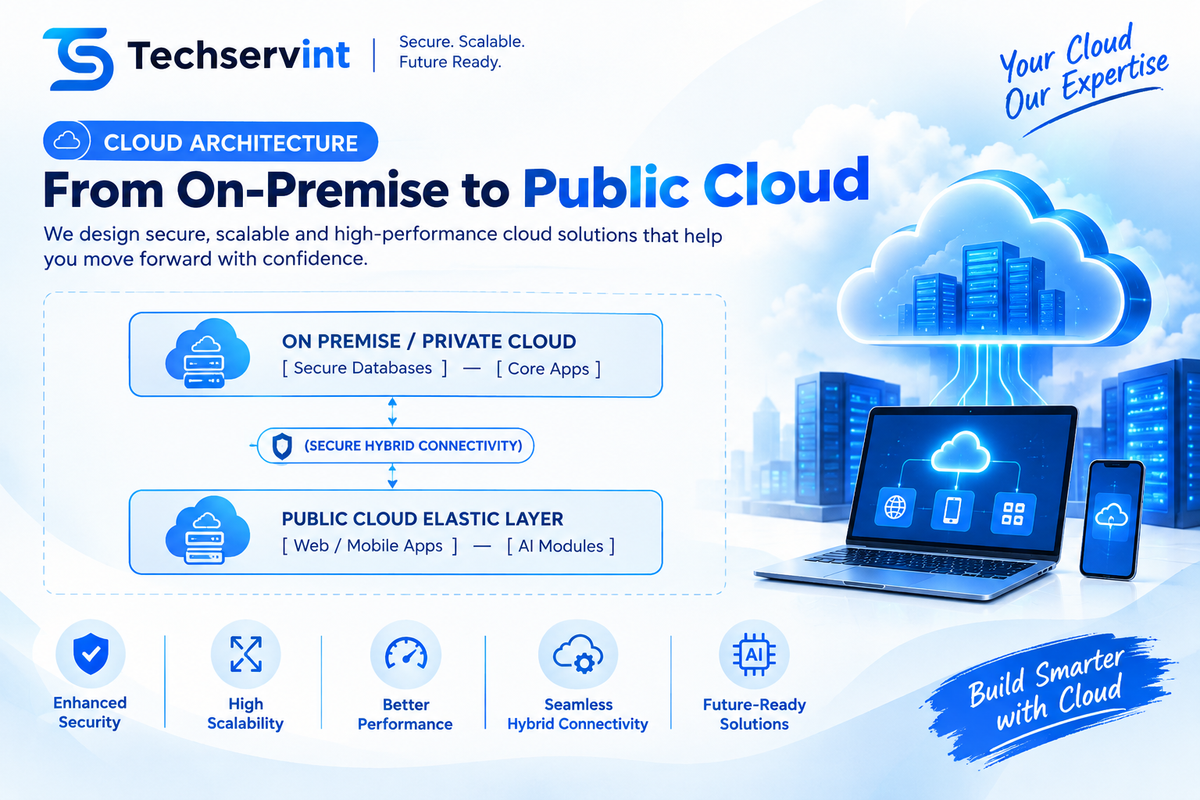
Instead of hosting your entire enterprise ecosystem on a single public platform, software engineers split the workloads based on security and computing requirements.
Your sensitive customer records, proprietary financial ledgers, and core authentication scripts remain perfectly secure within your controlled private databases.Meanwhile, your high-bandwidth front-end applications, heavy artificial intelligence pipelines, and temporary development sandbox environments run dynamically on the public cloud. This methodology utilizes specialized orchestration tools to ensure data syncs seamlessly across platform boundaries without bottlenecking performance.
Crucial Benefits of Hybrid Cloud Architectures
Upgrading your digital infrastructure with a carefully planned hybrid framework delivers immediate, measurable operational advantages:
- Dynamic Cloud Bursting: Automatically route unexpected web traffic spikes to public cloud instances to keep your primary private servers from crashing during peak loads.
- Elite Regulatory Data Compliance: Easily meet strict USA data sovereignty laws (such as HIPAA or PCI-DSS) by anchoring private consumer records on local servers while executing customer-facing scripts in the cloud.
- Massive Infrastructure Cost Controls: Stop wasting budget over-provisioning expensive localized hardware to handle rare traffic peaks; pay only for public cloud units during active surges.
- Built-In Disaster Recovery Resilience: Establish automated failover loops where your public cloud infrastructure instantly mimics operations if a localized data center undergoes a power failure.
Technical Framework: Our 5-Step Safe Migration Roadmap
Shifting large-scale enterprise databases across distributed networks requires a highly disciplined, risk-managed engineering framework. At Techservint, we secure your technical assets using this proven five-step migration roadmap:
Step 1: Workload Evaluation and Dependency Mapping
Our senior cloud architects begin by auditing your current application components. We document system dependencies, calculate network bandwidth thresholds, evaluate latency boundaries, and isolate which specific services should migrate to the public cloud versus which assets must stay behind the private firewall.
Step 2: Architecting the Secure Network Foundation
Before transferring a single byte of data, we build secure, dedicated network pipelines between your private servers and the cloud. We deploy encrypted Site-to-Site VPN tunnels or dedicated physical links (like AWS Direct Connect or Azure ExpressRoute) combined with zero-trust perimeter configurations.
Step 3: Configuring Containerized Application Wrapper Environments
To prevent software bugs caused by environmental differences, we encapsulate your applications inside modern container setups (such as Docker and Kubernetes). This ensures that your system components execute identically whether they are hosted on a local corporate server or a public cloud database node.
Step 4: Phased Data Migration and Live Traffic Routing
We completely reject high-risk, "all-at-once" system cutovers. Our engineers implement automated data replication scripts to mirror files gradually across environments. Once synchronized, we use smart DNS routing to divert small portions of user traffic (e.g., 5% increments) to the new cloud nodes to verify real-world stability.
Step 5: Implementing Centralized Observability and Tuning
Post-migration, we deploy advanced end-to-end monitoring environments (such as Datadog, Prometheus, or New Relic). This step gives your technical team complete visibility over cross-platform latency, security authentication access logs, and container compute health to maximize performance efficiency.
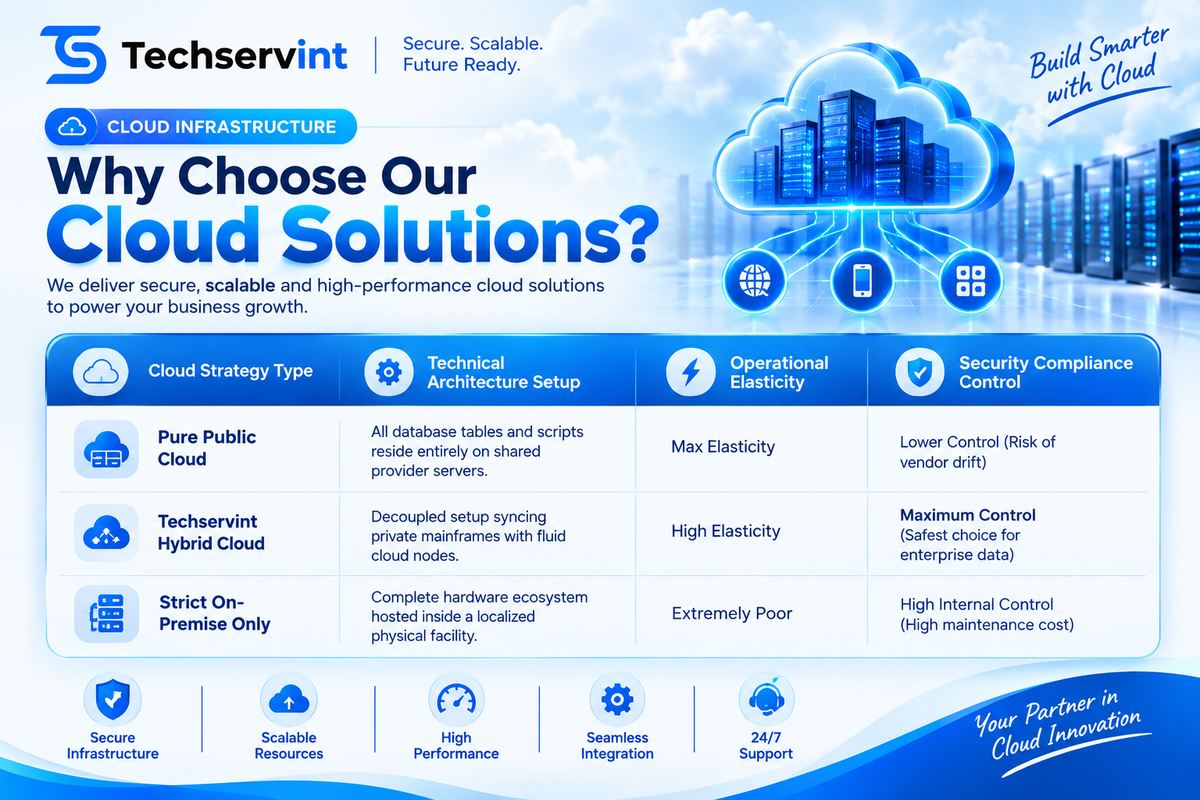
Comparing Infrastructure Scaling Strategies
Every scaling tech venture operates under unique budget targets, time-to-market boundaries, and regulatory security rules. The comparative matrix below analyzes the three primary system architectures:
Overcoming Key Hybrid Migration Security Challenges
Deploying a multi-platform computing layer introduces complex engineering problems. Here is exactly how our specialized development teams solve these challenges:
Challenge 1: Cross-Platform Data Synchronization Latency
- The Problem: Constantly reading and writing massive quantities of transactional records between localized databases and public cloud layers can cause application lag.
- The Techservint Solution: We optimize processing times by implementing event-driven architectures utilizing Apache Kafka or RabbitMQ, combined with high-speed Redis caching networks to keep data points synchronized instantly without performance drag.
Challenge 2: Managing Fragmented Security Access Keys
- The Problem: Maintaining different authentication systems across separate private and public cloud servers creates human configuration errors and exposes potential security holes.
- The Techservint Solution: We deploy a single, unified Identity and Access Management (IAM) framework using modern single sign-on (SSO) systems and automated secret vaults (like HashiCorp Vault) to ensure absolute security control.
Challenge 3: Unexpected Public Data Transfer Overhead Fees
- The Problem: Cloud vendors often charge hidden, expensive egress fees when moving large quantities of raw data logs out of their cloud networks back to private servers.
- The Techservint Solution: We design our modules to tightly compress all outbound payloads and structure analytical tasks to process natively within the cloud layer, preventing unnecessary data movements and keeping cloud spending highly optimized.
Why Partner with Techservint for Your Infrastructure Scaling?
Techservint is a premier custom software engineering and enterprise cloud optimization agency. We specialize in helping modern technology platforms break free from system limits by deploying secure, resilient business automation components.
We reject surface-level patches and unvetted cloud overhauls that run up massive server bills.Our engineering teams prioritize continuous application uptime, elite cybersecurity data protocols, and clear financial ROI above all else. By blending extensive legacy code modernization experience with cutting-edge cloud orchestration frameworks, we deliver the definitive technical architecture your company needs to lead its market.
Frequently Asked Questions (FAQs)
Will executing a hybrid migration cause downtime for our active customers?
No. By prioritizing a phased migration style using containerized environments and gradual DNS traffic diversion, your system remains completely online, secure, and fully operational for your global users throughout the entire transition.
How do we know which specific software features should move to the cloud?
As a general engineering rule, highly volatile features that experience unpredictable traffic spikes (like consumer search fields or image processing scripts) belong in the public cloud, while stable, highly regulated assets (like payment history logs) belong on private servers.
What happens if our cloud provider experiences a platform outage?
Because a hybrid model uses an independent architecture layout, our configurations ensure that if your public cloud provider undergoes a system drop, your central private servers can instantly reclaim critical workloads or reroute traffic to a secondary backup cloud vendor automatically.
Ready to Future-Proof Your Platform Infrastructure?
Stop letting rigid, outdated server limits throttle your application scaling. Partner with Techservint to securely deploy an enterprise-grade hybrid cloud environment tailored specifically to your platform's day-to-day transaction speeds.
Our elite team of software development architects is standing by to map out a low-risk, high-impact digital strategy aligned perfectly with your long-term expansion goals.