
Custom Odoo Module Development for Supply Chain Management
By Techserv International
Why Custom Odoo Module Development is Essential for Modern Supply Chain Management
Is your supply chain operation struggling to keep pace with rapid market shifts? For growing product, manufacturing, and logistics companies across the USA, standard, out-of-the-box ERP systems frequently fall short when confronted with real-world distribution complexities. Hidden inventory blind spots, unoptimized warehouse routing, delayed carrier communications, and disconnected data systems create operational lag that drives up overhead expenses and fractures customer loyalty.
While the default Odoo platform offers a solid baseline ecosystem for inventory management, every scaling B2B enterprise operates on unique structural mechanics. Trying to force your complex internal workflows into a generic, rigid software layout creates tedious, manual workarounds for your data teams.
The most profitable path to absolute logistics efficiency is investing in custom odoo module development for supply chain management. By tailoring your ERP environment to map your precise pipeline infrastructure, your organization can seamlessly eliminate data bottlenecks, maximize fulfillment accuracy, and confidently scale operations. Let’s analyze exactly how a custom-engineered Odoo module transforms your supply chain dynamics into a sustainable competitive advantage.
The Core Deficiencies of Out-of-the-Box ERP Systems
To understand why customized enterprise software development is crucial, look at how default ERP constraints limit operational visibility:
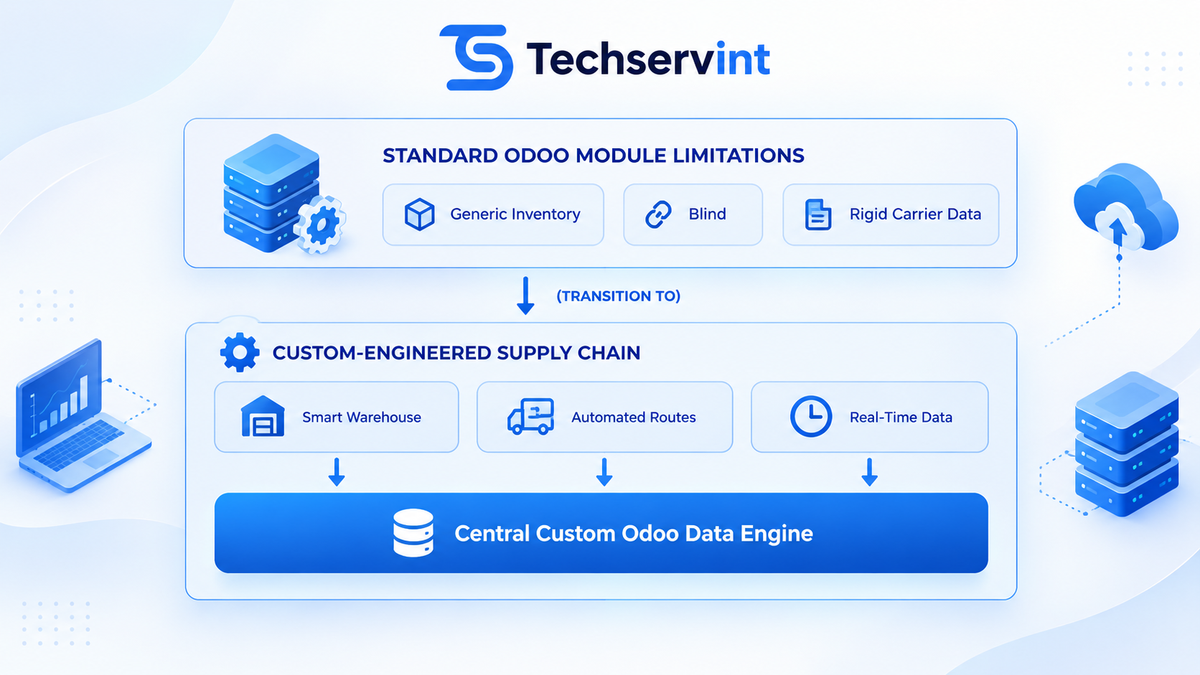
Standard ERP setups treat storage facilities as simple numeric values. They count items coming in and moving out but fail to dynamically adjust to complex inventory models, such as automated cross-docking schedules or real-time shelf life sorting.
When you scale past a specific volume, relying on these generic frameworks hurts your bottom line. Custom module engineering resolves this by building custom operational logic directly onto your database. This approach seamlessly bridges the communication gap between separate third-party shipping platforms, automated barcode scanners, and internal financial records.
Crucial Strategic Benefits of Custom Odoo Modules
Upgrading your enterprise supply chain ecosystem with tailored ERP modules provides direct, measurable operational advantages:
- Complete Warehouse Visibility: Track inventory accurately down to the exact row, bin, and shelf location with intelligent automated systems.
- Automated Route Procurement: Program complex procurement triggers that automatically order parts from alternative suppliers the moment raw stock drops past dynamic thresholds.
- Seamless Carrier Connectivity: Bridge your central ERP database with top global shipping networks (like FedEx, UPS, or DHL) to automatically populate accurate freight costs and live tracking values.
- Flawless Multi-Channel Sync: Unify disconnected sales signals from Shopify, Amazon, and offline wholesale pipelines into one centralized dashboard to prevent costly stockouts.
Technical Framework: Our 5-Step Custom Engineering Process
Deploying specialized ERP modifications within an active business architecture requires a highly disciplined, risk-managed delivery framework. At Techservint, we secure your operational workflows using this thorough five-step development roadmap:
Step 1: Deep Process Discovery and Gap Analysis
Our senior system architects deeply audit your active logistics framework. We analyze your pick-and-pack sequences, map out your international supplier loops, identify system bottlenecks, and figure out the exact limitations of your current ERP setup to design the perfect custom module architecture.
Step 2: Custom Python Business Logic and Schema Design
Odoo’s backend engine is powered by Python and PostgreSQL databases. We write clean, optimized Python code to introduce tailored operational models, custom view overrides, and specific data attributes tailored precisely to your supply chain requirements.
Step 3: API Pipeline and Third-Party IoT Integration
To drive deep automation, we build secure API pathways connecting your custom Odoo instance with your external technology investments. This step hooks your ERP into hardware tools like automated barcode readers, RFID inventory tags, and global electronic freight broker portals.
Step 4: Rigorous Quality Assurance and Stress Testing
Before moving code to production, our engineers run your custom modules through an exhaustive quality assurance matrix. We simulate extreme order volume spikes, stress-test background automation scripts, and test data consistency across all financial books to ensure absolute platform stability.
Step 5: User Training and Managed Cloud Deployment
We handle the complete data migration and module installation with zero disruption to your daily operations. Following a successful launch, we conduct thorough training sessions for your warehouse staff and operations managers to guarantee smooth adoption.
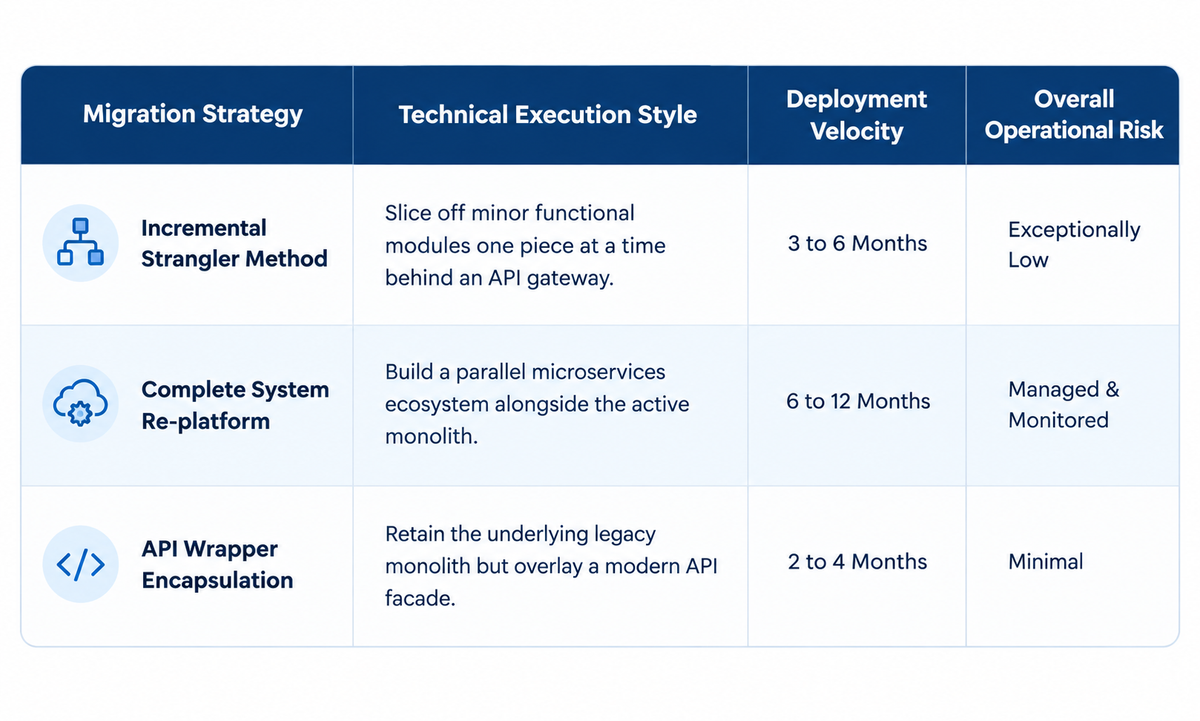
Comparing ERP Strategies for Modern Logistics
Different business models handle software modernization based on unique budget constraints, deployment velocities, and operational risk metrics. The matrix below compares the three primary approaches:
Overcoming Complex Supply Chain Development Challenges
Engineering enterprise-grade business automation components presents unique technical hurdles. Here is exactly how our specialized development teams solve them:
Challenge 1: Keeping Modules Stable During Odoo Version Upgrades
- The Problem: Poorly written custom extensions frequently break when the base Odoo platform releases major system-wide updates.
- The Techservint Solution: We build our modules strictly utilizing Odoo’s native inheritance model. By completely avoiding modifications to core source code files, your custom applications upgrade smoothly without system crashes.
Challenge 2: Processing Heavy Real-Time Analytics Without System Lag
- The Problem: Generating massive, live supply chain forecasting reports across millions of transaction rows can tie up your server resources and cause system lag.
- The Techservint Solution: We keep your platform fast by offloading heavy reporting calculations onto optimized background threads and utilizing advanced SQL queries to protect core system speed.
Challenge 3: Unifying Legacy Supplier Formats
- The Problem: Older suppliers frequently send stock data using outdated document types like CSV or TXT, which cannot communicate natively with modern JSON endpoints.
- The Techservint Solution: We engineer intelligent automated translation middleware directly within your Odoo module to parse legacy documents seamlessly, converting messy files into structured, readable entries automatically.
Why Choose Techservint as Your B2B Engineering Partner?
Techservint is a leading custom software development and enterprise digital transformation agency. We specialize in helping modern logistics firms and international service companies maximize their computing assets through intelligent business automation.
We reject superficial patches and generic software modifications. Our software engineers build rock-solid, scalable database components focused entirely on protecting your data integrity, maintaining continuous system uptime, and driving clear financial ROI. By combining deep supply chain workflow expertise with cutting-edge Odoo application architecture, we deliver the definitive operational framework your business needs to lead your market.
Frequently Asked Questions (FAQs)
Will deploying custom Odoo modules disrupt our ongoing warehouse operations?
No. We run development and testing cycles on isolated sandbox environments. The final deployment is scheduled during off-peak windows or weekends, ensuring your primary inventory network stays fully active without operational downtime.
Can custom modules connect with our specific regional shipping carriers?
Yes. We can design custom API integrations for any shipping carrier or third-party logistics (3PL) provider that exposes a web-accessible API, letting you automate tracking codes and shipping label generation directly inside your ERP.
What is the typical development timeline for a custom supply chain module?
Depending on how many unique automations your business needs, a tailored Odoo module takes anywhere from 6 to 10 weeks to design, develop, test, and safely deploy into your active production ecosystem.
Ready to Streamline Your Supply Chain Infrastructure?
Stop letting rigid, default software constraints bottleneck your distribution scaling. Partner with Techservint to securely deploy high-performance custom Odoo modules built specifically around your day-to-day warehouse mechanics.
Our elite team of enterprise software developers is standing by to structure a low-risk, high-impact digital strategy aligned perfectly with your long-term growth targets.