API First Architecture Development Advantages for Startups
By Techserv International
Why Top Tech Startups are Shifting to API-First Architecture for Scalable Apps
Are your product development lifecycles crawling at a snail's pace because your frontend and backend codebases are tangled together? For modern tech startups and scaling enterprises across the USA, engineering speed and cross-platform flexibility are the ultimate survival metrics. Building apps using traditional, code-heavy monolithic systems forces your engineering teams into highly dependent workflows where frontend user interface designers must constantly wait for backend database engineers to finish building server endpoints before they can even display data.
In today's fast-moving software market, delayed product rollouts represent a massive business risk. If launching a simple mobile application variant or expanding your product ecosystem to target smart devices requires rewriting your entire backend system from scratch, you will lose your competitive market edge to faster competitors.
The definitive structural approach used by world-class software teams is prioritizing an ecosystem built around API first architecture development advantages. By treating your application programming interfaces (APIs) as primary, standalone software products rather than secondary connectivity options, your startup can seamlessly run parallel development workflows, adapt to changing market requirements, and comfortably scale to handle millions of active daily users. Let’s break down the technical framework behind this modern methodology and discover why leading tech brands are moving away from traditional development blueprints.
The Architectural Shift: Traditional vs. API-First Design
To fully grasp the operational efficiency of an API-centric framework, non-technical founders must understand how this approach completely changes software building layouts:
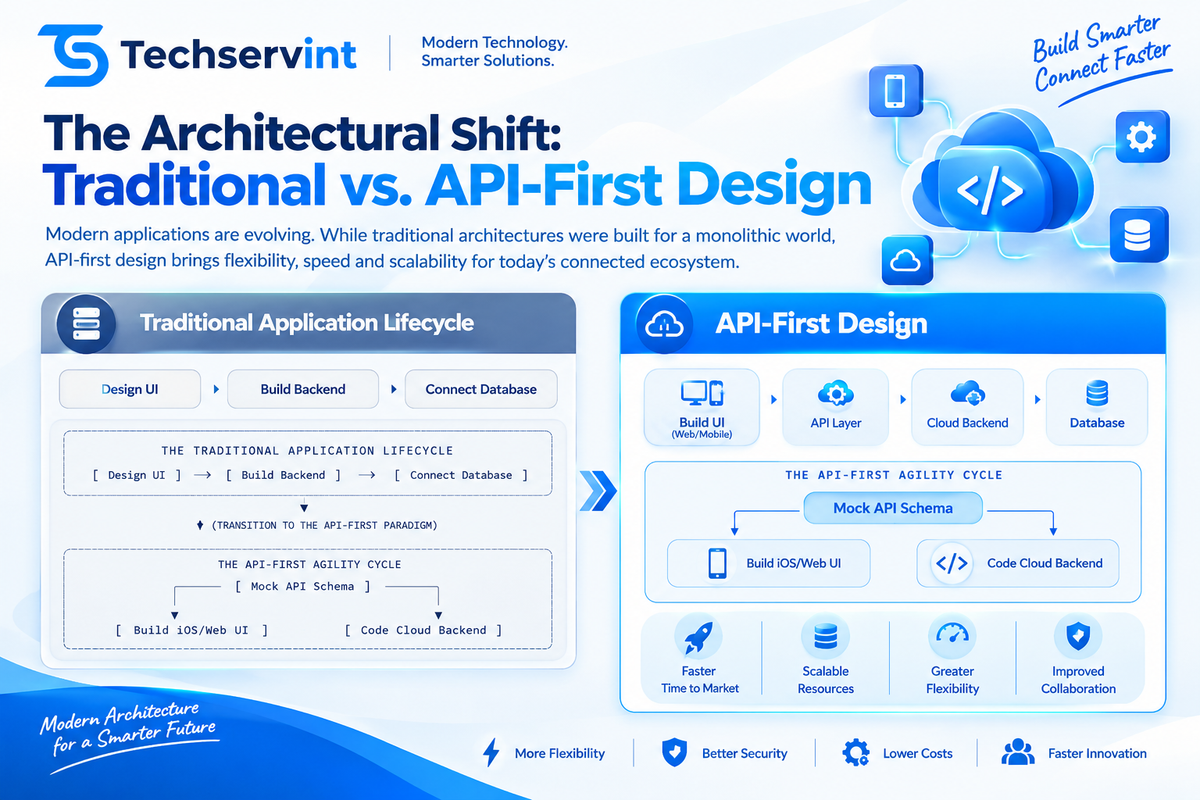
Traditional product workflows operate sequentially. The backend engineers must establish server structures, write database logic, and secure local environments before any frontend interface can safely pull live information. This sequential style introduces major bottlenecks that drag development timelines out for months.
Conversely, an API-first approach flips the workflow. Before a single line of client-facing user interface or backend database script is written, system architects construct a universal, highly secure data contract (typically using the OpenAPI specification format). Once this core schema layer is locked in, your frontend and backend engineers can build their respective components simultaneously in complete isolation. Your app developers can test user interfaces against a simulated mock database model while backend developers focus entirely on data storage optimization.
Crucial Strategic Benefits of API-First System Design
Shifting your startup's core engineering framework to a decoupled, API-centric paradigm delivers immediate, measurable competitive advantages over conventional architectures:
- Unmatched Parallel Engineering Velocity: Completely eliminate team dependencies, allowing your design and coding teams to build, test, and ship features simultaneously to cut production times in half.
- Flawless Multi-Platform Adaptability: Construct your central business logic engines once, then easily connect them to iOS apps, Android storefronts, web platforms, or corporate partner portals using the same API hooks.
- Drastic Reduction in Technical Debt: Because your internal software components communicate purely through isolated, structured web tokens, updates or adjustments to one microservice will never cause system-wide application crashes.
- Optimized Third-Party Integration Speed: Build your software to seamlessly plug into industry-leading SaaS platforms (such as Stripe for payments or Twilio for communications) directly via APIs, saving hundreds of coding hours.
Technical Framework: Our 5-Step API-First Development Blueprint
Engineering a highly secure, microservices-driven digital platform requires a meticulous, quality-assured product delivery process. At Techservint, we build scalable software applications using this structured five-step engineering roadmap:
Step 1: Interface Scoping and Data Schema Definition
We start by defining your product's functional requirements. Our system architects design a clear, comprehensive API contract using standard mock schemas, detailing exactly how data arrays flow across different system channels before any deep coding begins.
Step 2: Parallelizing Development Mock Environments
Once the API contract is validated, we launch mock server environments. This approach allows your frontend developers to build intuitive user interfaces using modern systems like React or Flutter, while our backend engineers build secure, performant database architectures in parallel.
Step 3: Engineering Secure Microservices Components
Our engineering team builds your core platform features as isolated microservices running inside containerized, serverless cloud architectures. This design ensures individual application features (like search tools or user accounts) scale independently to maximize efficiency.
Step 4: Rigorous Automated API Contract Testing
Before merging code layers, we run automated validation pipelines. We stress-test every custom endpoint against extreme security threats, verify server response times, and run compatibility checks to guarantee absolute communication stability across systems.
Step 5: Global Multi-Platform Deployment and Monitoring
We deploy your decoupled product ecosystem into elite cloud architectures like AWS or Google Cloud. Post-launch, we implement live observability dashboards to track real-time API call response metrics, network health, and security authorization logs to keep performance optimal.
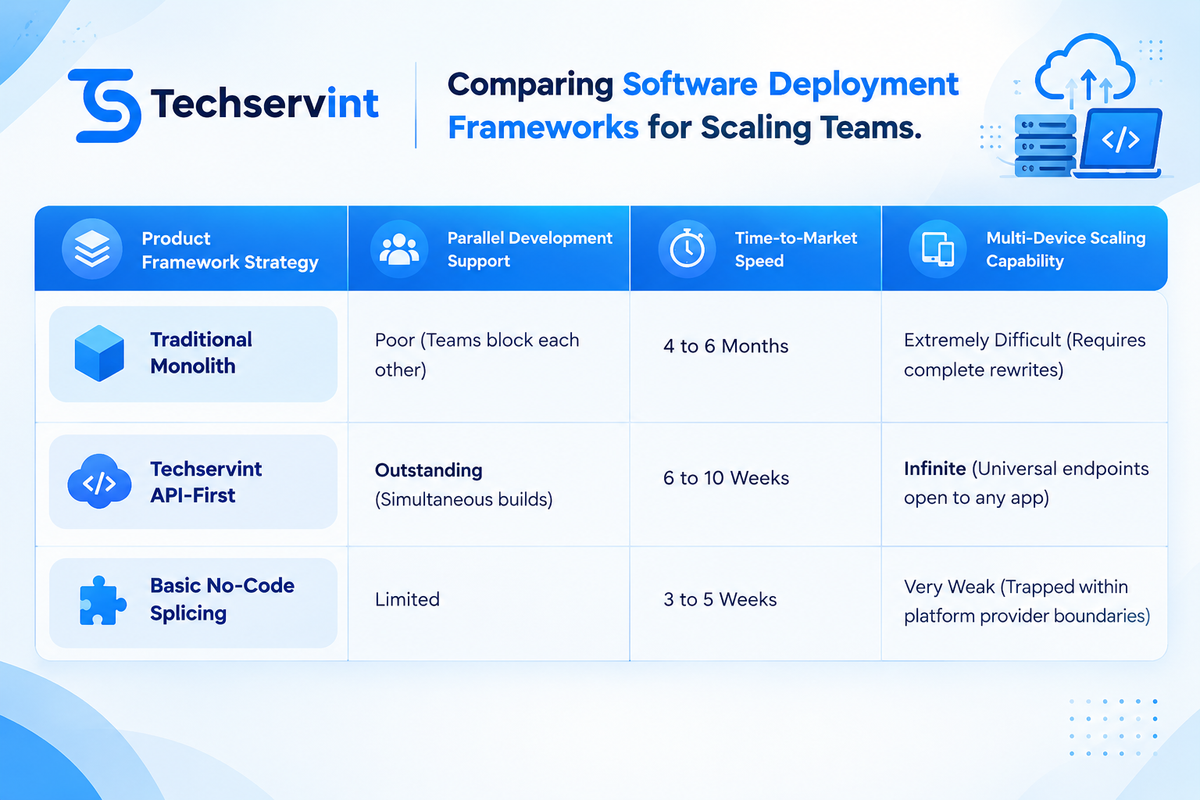
Comparing Software Deployment Frameworks for Scaling Teams
Different business architectures handle product engineering based on unique resource limits, time-to-market windows, and long-term scaling targets. The comparison matrix below details the three primary methodologies:
Overcoming Key Challenges in API-First Architecture Development
While a decoupled application layout offers massive advantages, implementing it incorrectly can present unique engineering hurdles. Here is exactly how our development teams solve these challenges for your startup:
Challenge 1: Ensuring Comprehensive and Updated API Documentation
- The Problem: As a startup iterates rapidly based on customer data, software code changes quickly. If your API documentation is manually updated, it quickly becomes mismatched, causing app crashes.
- The Techservint Solution: We deploy automated documentation pipelines using Swagger or Postman. The moment our engineers update a background codebase schema, the public developer documentation syncs instantly, preventing communication errors.
Challenge 2: Managing Multi-Layer Microservice Authentication
- The Problem: When an app relies on dozens of independent API endpoints to process data, managing user authentication keys safely across separate web requests becomes highly complex.
- The Techservint Solution: We implement a central API Gateway powered by modern OAuth2, JSON Web Tokens (JWT), and OpenID Connect frameworks to securely validate user permissions once before safely routing data across internal nodes.
Challenge 3: Maintaining Backend System Performance and Latency
- The Problem: Sending multiple, nested API requests from a mobile phone to fetch different pieces of data can introduce network lag and drain device battery life.
- The Techservint Solution: We optimize connection speeds by implementing advanced GraphQL gateway layers. This design allows client applications to bundle complex data requests into a single, highly compressed API call, slashing network latency.
Why Choose Techservint as Your Product Engineering Partner?
Techservint is a leading custom software development and enterprise digital transformation agency. We specialize in helping modern tech startups and scaling enterprises maximize their software assets through intelligent business automation components and scalable, decoupled web frameworks.
We reject rigid coding practices and bloated development lifecycles that drain startup capital. Our software engineers build rock-solid, scalable database systems focused entirely on protecting your data integrity, maintaining continuous system uptime, and driving clear financial ROI. By pairing deep startup ecosystem insight with cutting-edge API-first design models, we deliver the definitive operational framework your business needs to lead its market.
Frequently Asked Questions (FAQs)
Is an API-first setup more expensive for a startup than a traditional monolith?
While an API-first approach requires careful structural planning upfront, it significantly reduces your long-term engineering costs. It completely eliminates the need to pay developers for expensive system overhauls later when expanding your platform to support new mobile or smart device channels.
Can we transition an existing monolithic application into an API-first architecture?
Yes. We safely convert legacy monolithic apps into modular setups using the Strangler Fig design pattern, wrapping your existing database tables in secure API layers and gradually migrating individual features out without interrupting live operations.
Which technology stacks work best for api first architecture development advantages?
Because the entire framework is decoupled, you can combine different backend and frontend environments seamlessly. We typically pair high-performance backend tools like Node.js, Go, or Python with modern frontend frameworks like React, Vue.js, or native iOS/Android engines.
Ready to Accelerate Your Software Development Lifecycle?
Stop letting rigid, sequential software setups throttle your startup's market rollout. Partner with Techservint to securely deploy a high-performance, modular API-first architecture built specifically around your long-term product vision.
Our elite team of software development architects is standing by to structure a low-risk, high-impact digital strategy aligned perfectly with your long-term growth targets.